Shopify and NetSuite sync,
without the spreadsheet
Hydraflow keeps products, inventory, customers and orders in sync between NetSuite and your Shopify store. NetSuite stays the source of truth: product and inventory data go out to Shopify, and Shopify orders and customers come back into NetSuite. Hycentra, the team that built Hydraflow, sets it up around your rules and runs it for you.
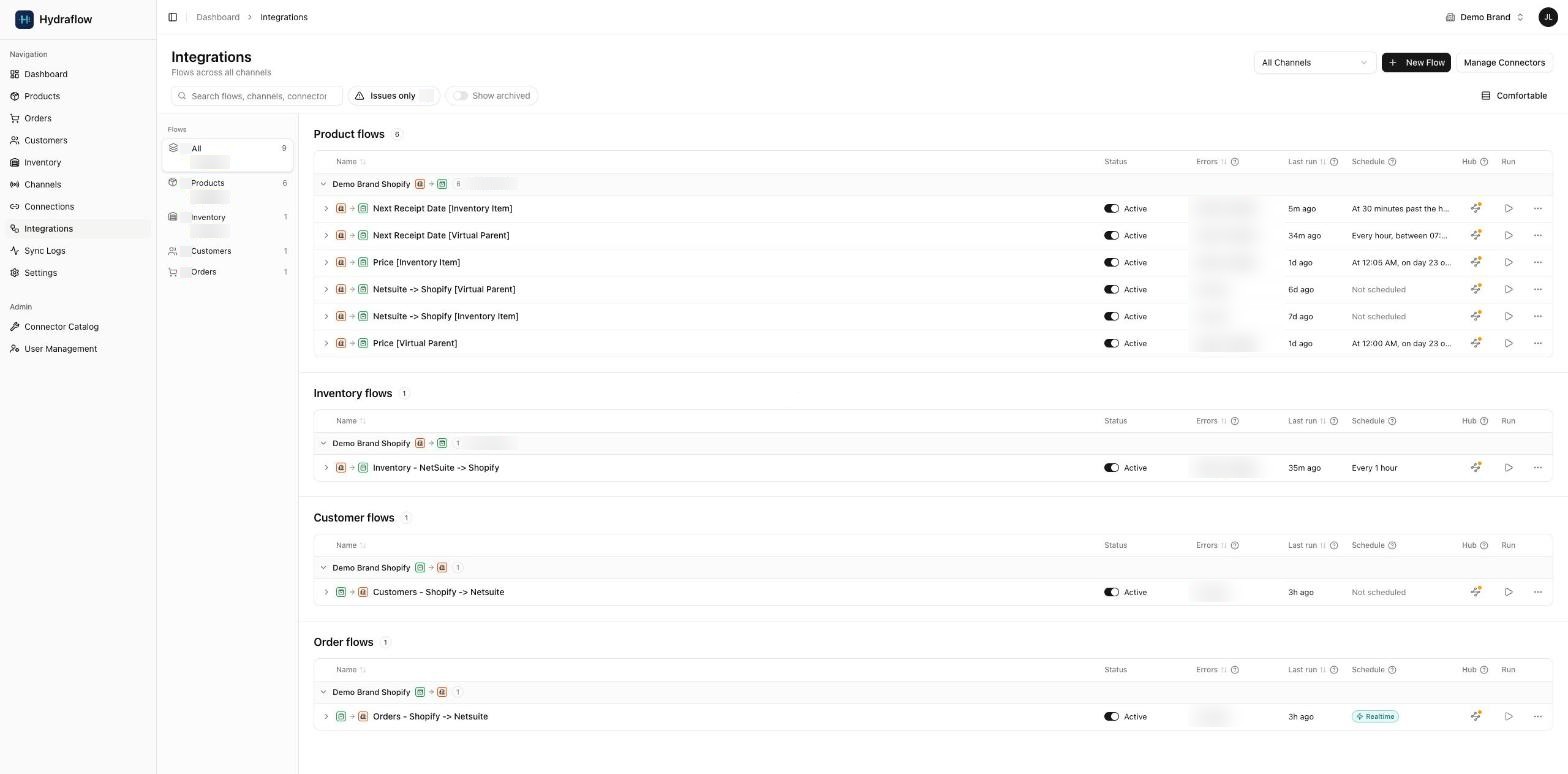
A live NetSuite and Shopify account running nine flows: products, price, next receipt date, inventory, customers and orders, in both directions between NetSuite and Shopify, on schedules from hourly to real time. Client name masked.
Where it breaks today
The store sells what the warehouse does not have
Shopify showed stock NetSuite had already committed, and now there are refunds to issue and customers who may not come back.
Orders get typed in twice
Your team spends hours every week copying orders, product data and stock levels between NetSuite and Shopify by hand.
Nobody trusts the numbers
NetSuite says one thing, Shopify says another, and the workarounds live in someone's spreadsheet because the off-the-shelf connector stopped fitting how you sell.
How Hydraflow handles it
NetSuite stays the source of truth
Products, with their SKUs, attributes, variants and images, are maintained in NetSuite and published to Shopify, and available stock is pushed to the store on the schedule you set.
Orders and customers come back automatically
Shopify orders land in NetSuite as sales orders, ready to fulfill. Shopify customers are matched to existing NetSuite records, or created when new.
One flow per kind of data
Products, inventory, customers and orders each get their own flow, scoped to the fields you choose, so a change in one place cannot spill into another.
Every sync is logged
Each execution is recorded with records moved, duration and status, and you can filter the history by status, channel and date. You can prove the sync is working instead of guessing.
Set up and run for you
Hycentra builds the flows around how you sell, keeps them current with platform API changes, and a person approves every production change.
A NetSuite brand has already moved its Shopify store off its previous connector and onto Hydraflow, in production.
Questions we hear
Does Hydraflow replace our NetSuite connector?
It can. Hydraflow is built for NetSuite brands that have outgrown an off-the-shelf connector, and one NetSuite brand has already moved its Shopify store onto Hydraflow in production. We look at how your store and NetSuite work today before recommending the switch.
Which system is the source of truth?
NetSuite. Products and inventory flow from NetSuite to Shopify, and orders and customers flow from Shopify into NetSuite, so the ERP keeps the record your finance and warehouse teams already rely on.
Who sets it up and maintains it?
Hycentra, the team that built Hydraflow. We set up your flows around your rules, run them for you, and keep them current with platform API changes. A person approves every production change.
How much does it cost?
Hydraflow, managed, starts from $288 per month plus a one-time setup, so your flows are built around how you sell.
See your NetSuite and Shopify in sync
Book 30 minutes. We will look at how your store and NetSuite work today and show you what Hydraflow would change.